


Quick Answer
The essential Southwest Ireland golf courses are Ballybunion Old, Lahinch Old, Tralee and Waterville. Old Head adds the most dramatic clifftop setting, while Doonbeg gives the route a polished resort stop in County Clare.
The mistake is treating them as a checklist. Lahinch and Doonbeg sit in County Clare, Ballybunion and Tralee in northern County Kerry, Waterville farther around the Ring of Kerry, and Old Head near Kinsale. Course selection must account for nights and hotel changes.
How We Chose
This is not a claim that one course is definitively better than the rest. Each selection has a different role in a South West Ireland trip.
We considered the character of the golf, architectural interest, setting, visitor appeal and how naturally the course fits with the others. We also gave weight to routing. A famous course does not automatically improve a trip if reaching it turns the day into a long transfer in both directions.
Every course discussed is represented in JEL's current South West Ireland offering. Ballybunion, Lahinch, Tralee and Waterville also have dedicated destination pages in the JEL catalog.
The Best Options
Ballybunion Old Course: The Classic Links Centerpiece
Ballybunion's Old Course is the course many golfers picture when they imagine Irish links. The early holes introduce the town and cemetery boundary before the routing reaches taller dunes and the Atlantic. From the 10th onward, the course becomes more isolated, with fairways pressed between dune ridges and several holes running directly along the coast.
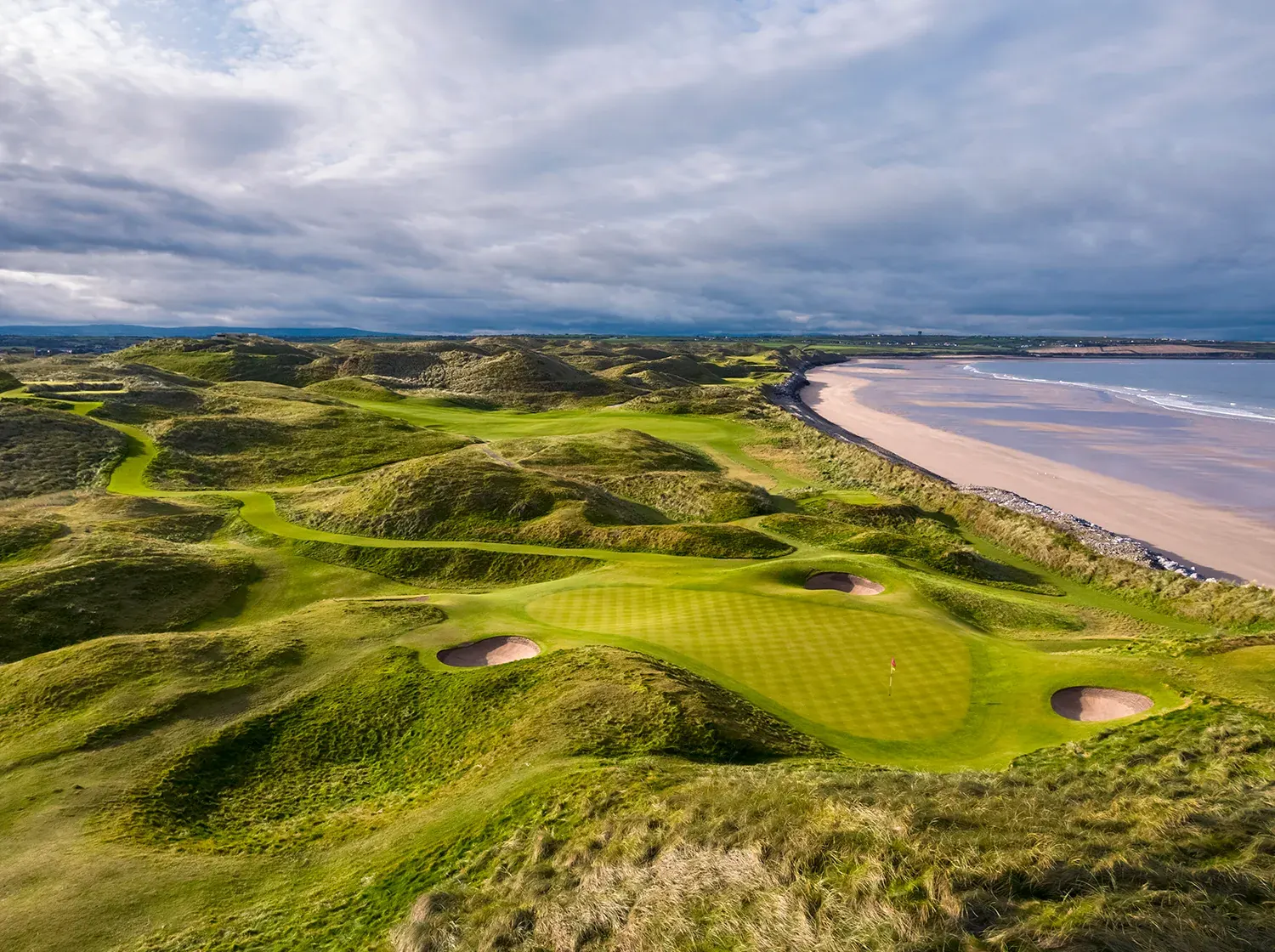
Ballybunion keeps changing direction, elevation and scale. Blind or partially hidden targets are part of the experience. A caddie helps golfers understand which slopes feed the ball and which misses leave no recovery.
For a first trip, Ballybunion Old should shape the route. The Cashen Course can add a second round, but should not replace the Old Course when time is limited.
Lahinch Old Course: The Most Distinctive Old-School Round
Lahinch combines serious architecture with two holes that would be unlikely to appear in a modern design. The par-5 fourth, Klondyke, asks golfers to play over a tall dune toward a hidden section of the hole. The par-3 fifth, Dell, sends the tee shot over a dune ridge to a green that is largely out of sight.
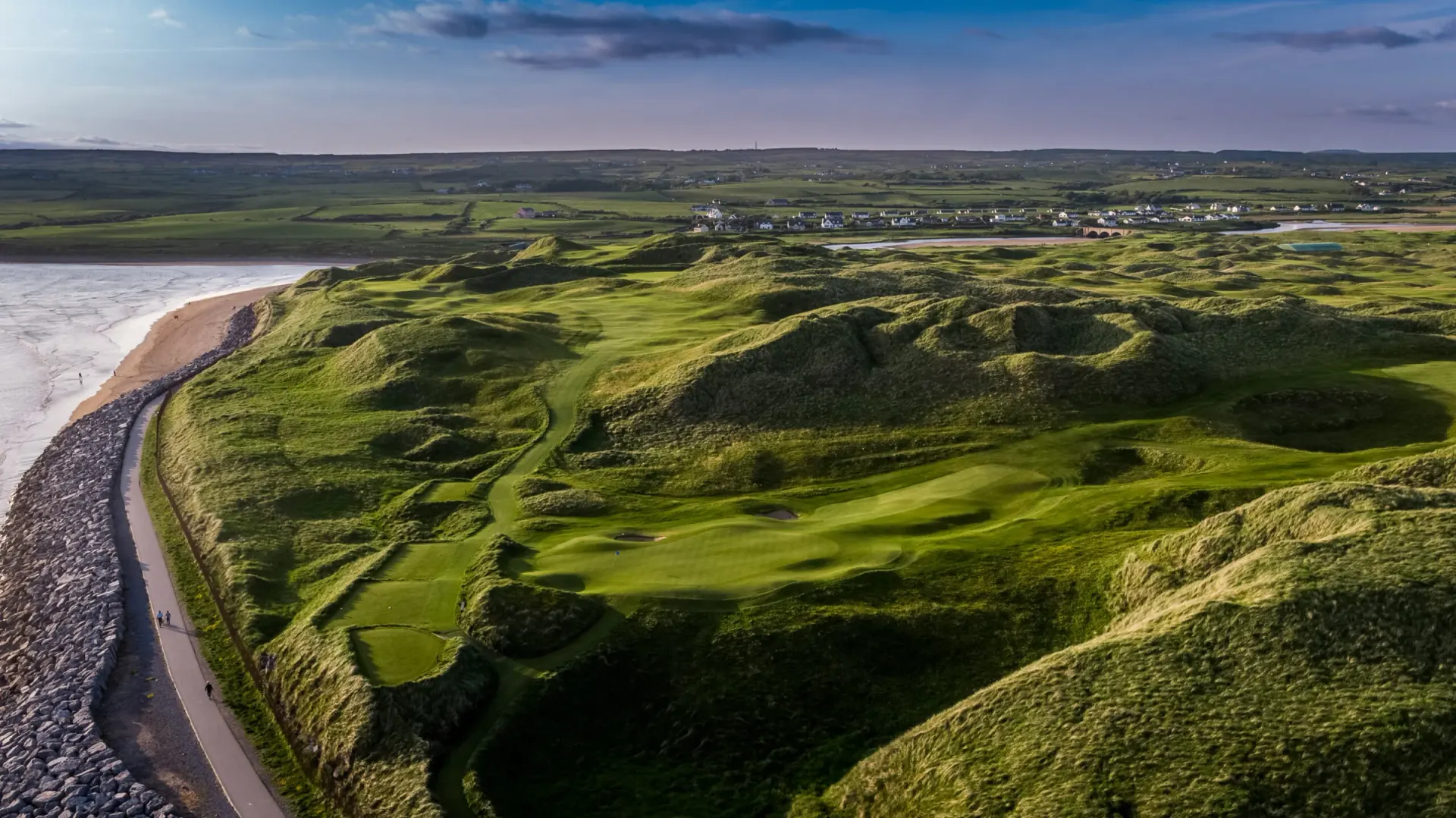
Those holes give Lahinch its personality, but the course is not a novelty act. Alister MacKenzie shaped much of the routing and greens, with later work by Martin Hawtree. Wind, angles and uneven lies matter as much as length.
Lahinch is also one of the easiest places in the region to build an evening around. The town sits beside the course, making it a natural first or final base for groups using Shannon Airport.
Tralee Golf Club: The Most Dramatic Back Nine
Tralee has two clear acts. The outward nine moves across more open ground and gives the group time to settle into the round. The back nine enters larger dunes beside the Atlantic and becomes the stretch everyone remembers.
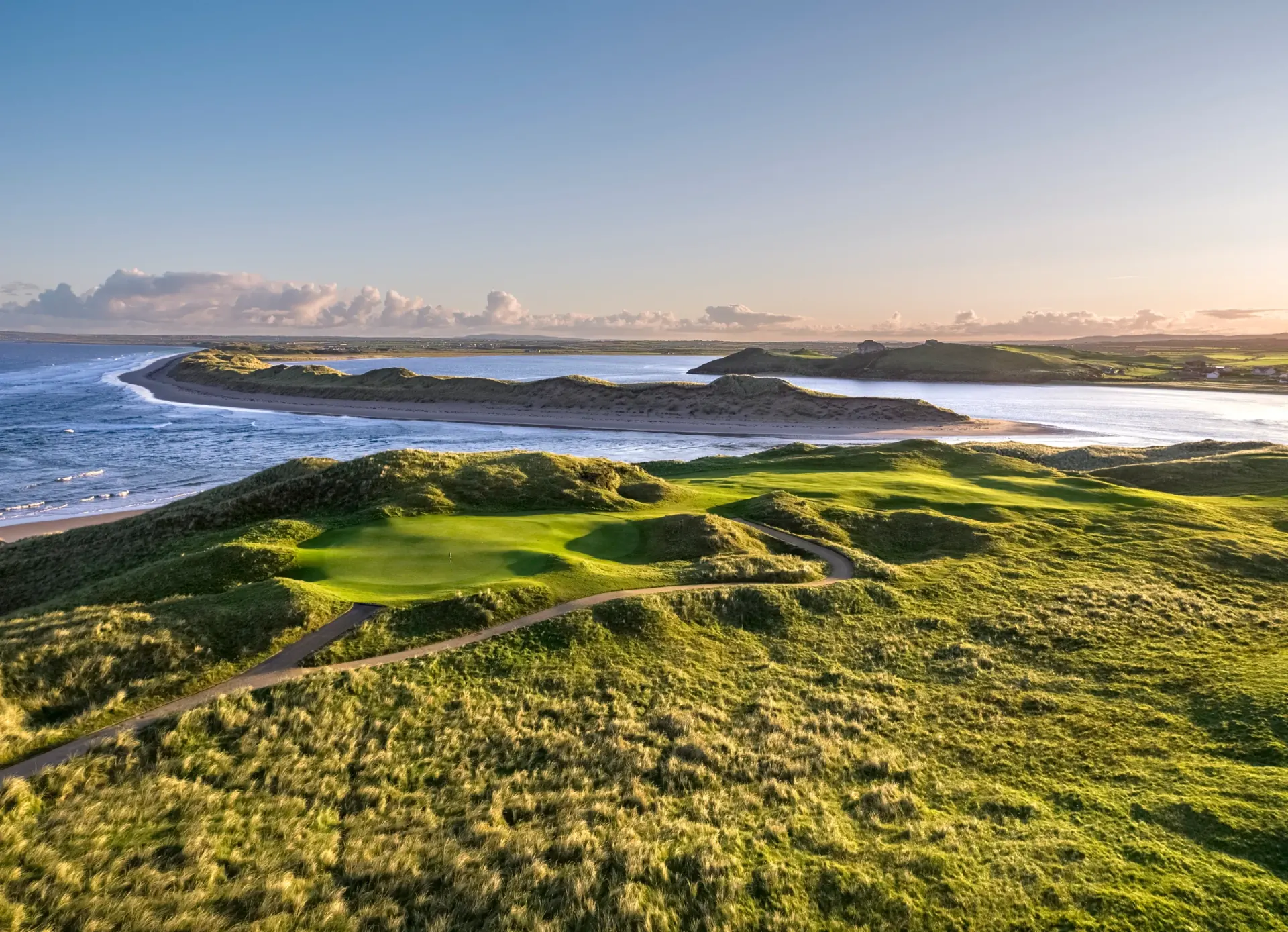
Arnold Palmer designed the course that opened at Barrow in 1984, but natural landforms control the second half. Elevated tees reveal beaches, cliffs and Tralee Bay before holes drop between the dunes.
Tralee fits naturally with Ballybunion because both occupy the northern side of the County Kerry portion of the trip. Playing them from the same general base is more practical than treating either as a stand-alone excursion.
Waterville Golf Links: The Best Complete Test on the Kerry Route
Waterville occupies an isthmus bordered by the Atlantic, the Inny River and estuary, and native bogland. The setting is open and exposed, but the strongest holes use dune corridors that make parts of the course feel separated from everything around them.
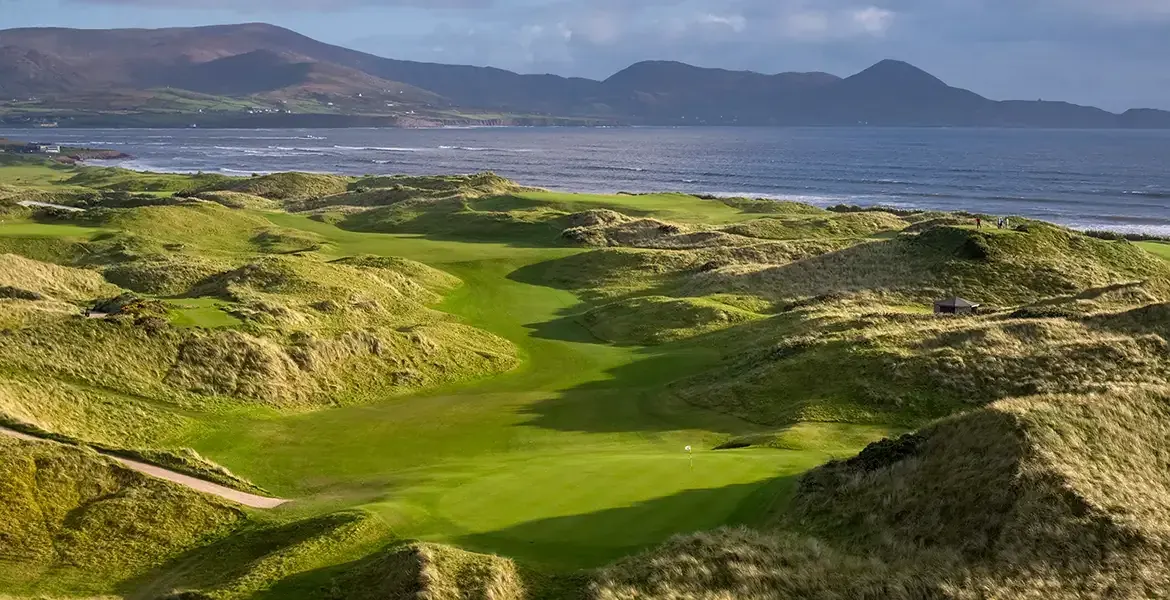
The course grew from 19th-century golf into the Eddie Hackett routing later refined by Tom Fazio. It has fewer deliberately blind moments than Lahinch. Firm turf, wind, subtle greens and well-positioned bunkers create a complete links test.
Waterville belongs on a Kerry-focused trip, but its location matters. It sits farther around the Iveragh Peninsula than Ballybunion or Tralee. That distance makes a southern Kerry base or a planned hotel move more sensible than repeatedly driving out and back from County Clare.
Old Head Golf Links: The Most Spectacular Setting
Old Head occupies a promontory extending more than two miles into the Atlantic near Kinsale. Cliffs and ocean surround much of the property, and the lighthouse gives the course a landmark visible throughout the round.
Old Head suits a group that values scenery and a memorable final-day setting. It also can distort an otherwise clean route, so it works best as a Kinsale extension rather than a rushed day between Lahinch and Ballybunion.
The golf is exposed, and the weather can completely change the way the cliffside holes play. Walking with a caddie is encouraged by the club and fits the experience.
Doonbeg: The Resort-Based Clare Option
Doonbeg gives Southwest Ireland a different type of stop. The links runs through dunes beside Doughmore Bay, but the larger draw for some groups is the ability to combine golf, lodging and dining in one place.
It fits naturally beside Lahinch in County Clare. Doonbeg can provide an arrival round, a second Clare course or a resort base. It is less essential than the four core links for a first trip, but can make the itinerary more comfortable.
How the Options Compare
- Best classic links centerpiece: Ballybunion Old
- Best for quirks and golf history: Lahinch Old
- Best back-nine scenery: Tralee
- Best complete architectural test: Waterville
- Best pure setting: Old Head
- Best resort-based stop: Doonbeg
For a four-round first trip, Ballybunion, Lahinch, Tralee and Waterville form the strongest core. Add Old Head when the schedule allows a Kinsale extension. Add Doonbeg when the group values a Clare resort stay or wants another course near Lahinch.
How to Choose
A five-night trip should stay disciplined. Three or four priority rounds with one or two lodging bases will usually feel better than trying to reach every course. Lahinch, Ballybunion and Tralee can form the backbone, with either Doonbeg or Waterville selected according to the route.
Six or seven nights gives the trip space for Waterville and a more relaxed drive through County Kerry. Old Head becomes more realistic once the group can finish near Kinsale rather than returning north after the round.
Golfers who enjoy blind shots and old links features should prioritize Lahinch. Groups seeking traditional dunes golf should protect Ballybunion. Tralee and Old Head deliver the biggest visual moments, while Waterville offers the most even test.
Planning Considerations
- Use Shannon Airport when the route begins with Lahinch, Doonbeg or northern County Kerry.
- Avoid one hotel for the entire region if Waterville and Old Head are both included.
- Expect to walk and prepare for wind, rain and changing temperatures in the same round.
- Request caddies early for the highest-priority courses, especially when several groups are traveling together.
- Choose tees for the wind and walking schedule rather than the scorecard yardage alone.
- Keep one course flexible until the route and lodging are confirmed.
FAQ
What are the must-play courses in Southwest Ireland?
Ballybunion Old, Lahinch Old, Tralee and Waterville form the strongest four-course core. Old Head is the leading addition for scenery, while Doonbeg works well for a resort stay in County Clare.
How many nights do you need?
Five nights can support three or four courses with disciplined routing. Six or seven nights is better for four or five rounds across Clare and Kerry. Add more time if Old Head is included as a Kinsale extension.
Can you stay in one hotel for the entire trip?
It is possible, but not always smart. One base works for Lahinch and Doonbeg or for Ballybunion and Tralee. Waterville and Old Head stretch the route far enough that a second base usually reduces unnecessary driving.
Is Old Head close to Ballybunion and Lahinch?
No. Old Head is near Kinsale on Ireland's southern coast. It should be treated as its own extension instead of being described as a neighboring course.
When is the best time to go?
The main golf season runs from spring into early fall, with the longest days around summer. Weather remains variable throughout the season, and the most requested tee times require early coordination.
Should golfers use caddies?
Caddies add real value on unfamiliar links. They help with lines, wind, hidden targets and the way firm ground moves the ball. Availability varies, so requests should be coordinated with the tee times.
Plan Your Trip with JEL
JEL plans and books the complete Ireland golf trip, including tee times, lodging and transportation between the courses. Share your dates, group size and priority rounds through the trip inquiry form, and we can build a South West Ireland route without turning the week into a series of long drives.


