


Quick Answer
Cabot Links and Cabot Cliffs are not competing versions of the same course. Links is the true seaside layout, running on firm ground between Inverness and the Gulf of St. Lawrence. Cliffs covers more varied terrain, moving through dunes, woodland and exposed bluffs before its famous closing holes.
The right Cabot Cape Breton trip includes both. The useful decision is how to order the rounds, whether either deserves a replay and how much time to leave around each walk.
At a Glance
| Trip element | Cabot Links | Cabot Cliffs | |---|---|---| | Design | Rod Whitman | Bill Coore and Ben Crenshaw | | Setting | Seaside links beside Inverness | Dunes, woodland and coastal bluffs | | Listed length | 6,860 yards | 6,835 yards | | Strongest identity | Firm turf, wind and ground game | Landscape changes and strategic width | | Finish | Returns beside the Lodge | Dramatic coastal 16th through 18th | | Best trip role | Links foundation and high-value replay | Full-day centerpiece and varied walk |
Setting and Routing
Cabot Links stays close to the sea and village. Every hole has an ocean view, five sit directly beside the beach, and the routing regularly brings the harbor and Gulf into play. Its visual character is consistent: low, firm linksland with the town never feeling far away.
Cabot Cliffs changes environments. The routing starts high enough to show much of the property, moves closer to the coastline, passes through dunes and woodland, then returns to the exposed bluffs. Those transitions are a major part of the round. Cliffs feels larger because the scenery and scale keep changing.
Links is more connected to Inverness and the Lodge. Cliffs feels more removed, with its own golf shop, practice range, nearby residences and access to The Nest. The resort shuttle continuously links the two sides.
Architecture and Strategy
Cabot Links relies heavily on firm turf, wind and angles. The fairways often provide room, but the side you choose affects the approach. The sixth bends around the harbor, the short par-4 third raises the possibility of driving near the green, and the tiny par-3 14th turns distance control into a serious problem when the wind is up.
The course makes a strong case for keeping the ball lower. Approaches can use contours and entrances rather than stopping only through height and spin. Greens such as the double-plateau second also make the angle of entry important.
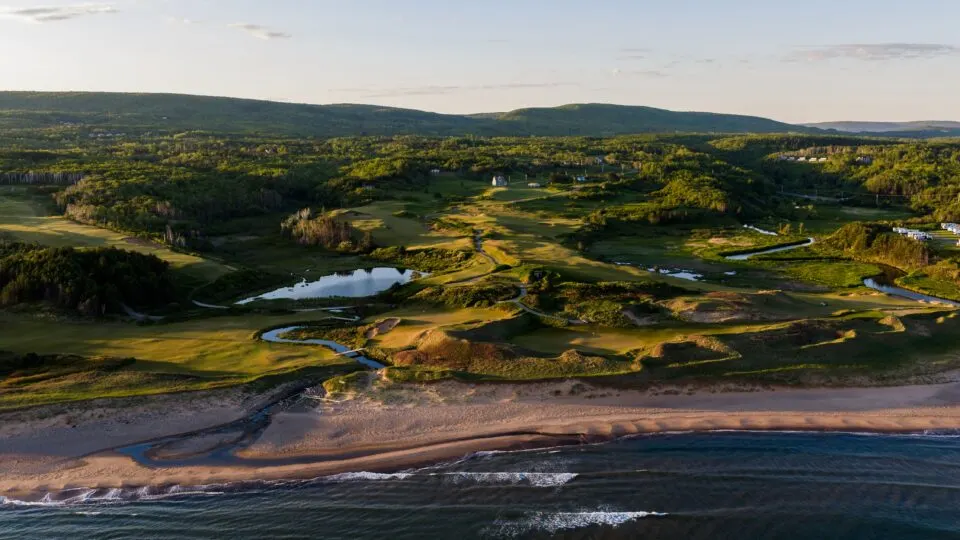
Cabot Cliffs uses width differently. Several holes present more than one route, then make the next shot depend on the line chosen from the tee. The fourth has two greens, the fifth uses a classic Cape-style decision, and the closing holes continue asking where you want to approach from rather than merely whether you found the fairway.
Cliffs is not difficult only because it is dramatic. Its challenge comes from recognizing the correct space within broad playing corridors, judging uneven ground and handling greens that can make a safe-looking position less useful than expected.
The Scenic Difference
Cabot Links keeps the Gulf in view throughout the round. Its best scenery is woven into the golf rather than saved for a single reveal. The beachside holes, harbor and view back toward Inverness make the course feel inseparable from its location.
Cabot Cliffs produces the larger individual moments. The par-3 16th plays against the cliff edge, the short par-4 17th offers alternate routes, and the 18th follows the coast home. That closing stretch is the image most golfers know before arriving.
Calling Cliffs more dramatic does not make Links less scenic. Links offers the more continuous seaside experience; Cliffs supplies the sharper changes and more theatrical finish.
Walking and Caddie Experience
Both courses are walking-only except for limited medical-cart arrangements. Neither should be treated as an effortless resort round, especially when wind or rain adds to the day.
Links generally feels more exposed and connected to the low coastal ground. Cliffs has more changes in terrain and a broader journey across the property. Golfers concerned about energy should schedule them on separate days and avoid automatically adding 18 more holes after either round.
Caddies are optional and available by advance request. Local knowledge helps on both courses, but for different reasons. At Links, it is valuable for wind, landing areas and green contours. At Cliffs, it helps identify routes, sight lines and the useful side of the wide fairways.
Which Course Should You Play First?
Playing Cabot Links first gives the trip a logical progression. It introduces the firm turf and wind that define the resort, then Cliffs expands the experience with more varied landscapes and its coastal finish.
There is no need to force that order if availability points the other way. Weather matters more than a theoretical sequence. If one day has the cleaner forecast, it can make sense to protect the round the group is most eager to see under good conditions.
The main mistake is assigning one course to arrival afternoon and treating the other as the only important round. Each deserves its own place in the itinerary. Our Cabot Cape Breton planning guide explains how that works over three or four nights.
Replay Value
Cabot Links may produce the more revealing replay. Once you understand the preferred lines and see how the ball moves on the ground, the second round becomes less about discovery and more about using that knowledge. A different wind can also change the course substantially.
Cabot Cliffs has equal visual replay value and enough alternate routes to remain interesting. Groups with four nights should choose a replay based on which type of golf they want more of, not on a universal ranking.
If the group does not want another full 18, The Nest provides an 11-hole par-3 round on the Cliffs side of the property.
Best Fit by Golfer
Choose extra time at Cabot Links if your group values traditional links golf, firm conditions, low shots and the relationship between a course and its town.
Choose extra time at Cabot Cliffs if the group is drawn to changing terrain, elevated coastal views, strategic width and a closing stretch that feels completely different from the opening holes.
For most first-time groups, there is no reason to choose between them. Start with one round on each, then use the fourth night to create room for a replay, The Nest or weather flexibility. The current lodging and resort details are on the Cabot Cape Breton destination page.
FAQ
Is Cabot Cliffs better than Cabot Links?
There is no useful overall answer. Cliffs has the more dramatic landscape changes and finish. Links provides the purer seaside-links experience and may reveal more on a replay.
Are both courses walking-only?
Yes. Cabot Links and Cabot Cliffs are walking-only except for limited medical-cart arrangements made in advance.
Which course is more scenic?
Cliffs has the more dramatic individual views, particularly late in the round. Links provides ocean scenery across the full routing and a stronger connection to Inverness and the beach.
Which course is harder?
Conditions and tee selection matter more than the small difference in listed yardage. Links exposes the golfer to wind and firm turf, while Cliffs adds terrain changes, alternate routes and demanding green positions.
Should you replay Links or Cliffs?
Replay Links for another chance at its angles and ground game. Replay Cliffs for the varied routing and coastal finish. There is no wrong choice if the stay has room for it.
Plan the Complete Cabot Trip
The goal is not to select one Cabot course and leave the other behind. Tell JEL about your dates, group and preferred pace, and we can arrange the stay around both main courses, The Nest, lodging and caddie requests.


