


Quick Answer
Pinehurst is one of the few places where the golf trip extends well beyond the tee sheet. No. 2 is the round many groups build around, but the depth of the courses, historic hotels, main clubhouse and walkable village are what make Pinehurst Resort worth three or four nights.
Why Go
James Walker Tufts began developing Pinehurst in 1895, golf arrived in 1898 and Donald Ross took charge of the resort's golf operation in 1900. This is not a resort that later added golf; the village grew around the game.
That history still feels present. The Carolina Hotel, Holly Inn and main clubhouse are part of the trip, not simply places to sleep and check in. At the clubhouse, you can finish on No. 2, watch other groups come up the 18th from The Deuce, then head to The Cradle or Thistle Dhu without turning the afternoon into another drive.
Pinehurst has ten full-length courses, and trying to cover too many can make the trip feel rushed. A better first visit combines No. 2 with two or three courses that provide a different look at the Sandhills.
The Golf
Pinehurst No. 2
No. 2 is the centerpiece. Donald Ross designed it around the natural movement of the land, and Bill Coore and Ben Crenshaw's restoration returned sandy native areas and wiregrass to the course. The famous crowned greens reject shots that miss in the wrong place, so the difficulty is often found in the final few yards rather than in narrow corridors off the tee.

The course has hosted four U.S. Opens, including the 2024 championship, and is the USGA's first U.S. Open anchor site. A caddie adds valuable local knowledge around the greens. Protect this round on the itinerary rather than squeezing it into an aggressive 36-hole day.
Pinehurst No. 4
No. 4 is the natural companion to No. 2. Gil Hanse's 2018 redesign uses exposed sand, native vegetation, broad views and more dramatic movement. It feels unmistakably like the Sandhills, but the visual scale and shaping separate it from the subtler challenge next door.
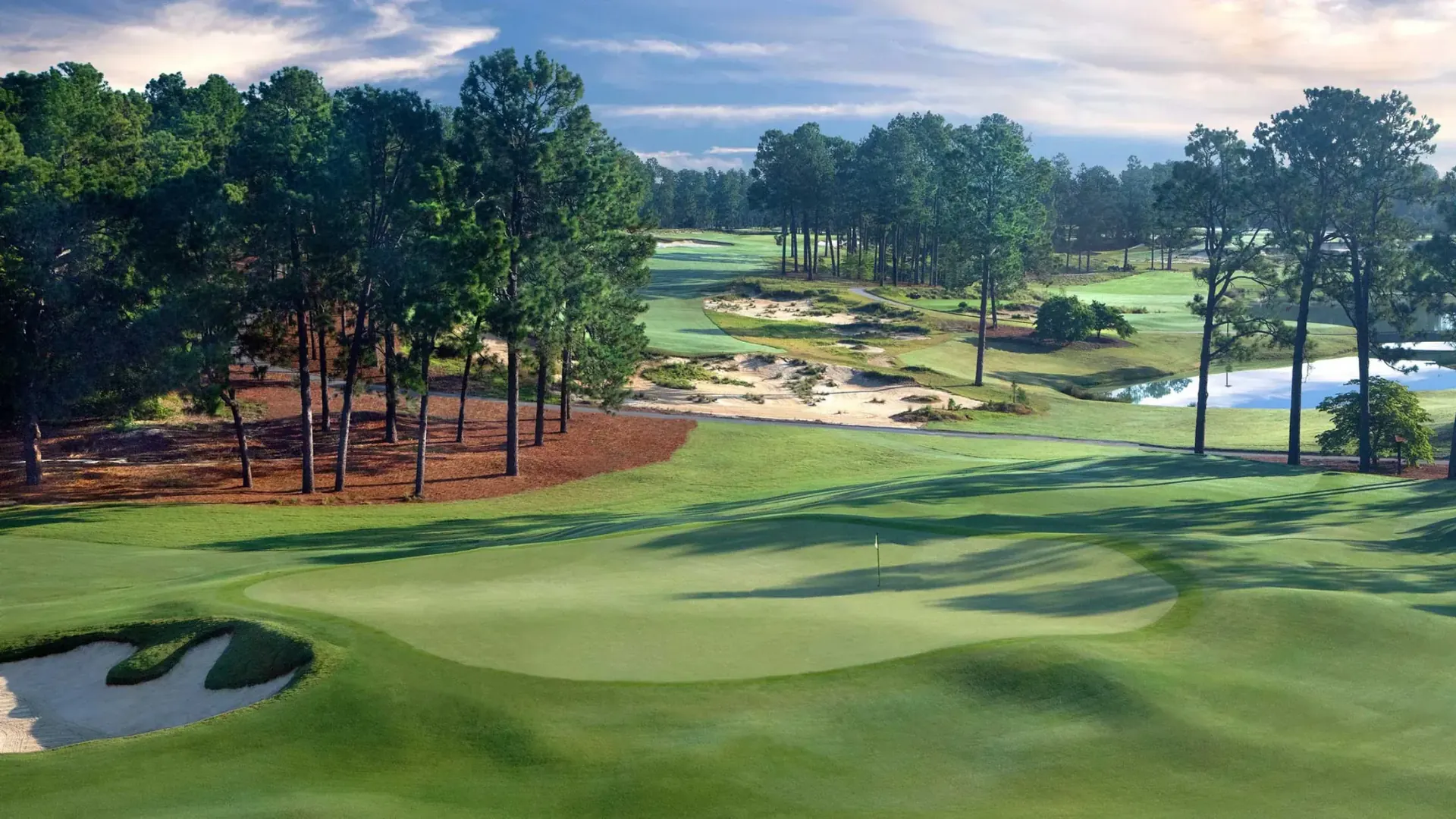
No. 2 and No. 4 make a strong championship pairing without repeating the same experience.
Pinehurst No. 10
No. 10 opened in 2024 as Pinehurst's first new course in nearly three decades. Tom Doak routed it through the Pinehurst Sandmines, where rolling ground, native wiregrass and rugged land left by former mining operations give it a bigger, rougher character than the courses around the main clubhouse.
No. 10 occupies a separate setting and should be treated as a featured round. Groups choosing between three and four nights should decide early whether it is a priority.
Pinehurst No. 8 and the Rest of the Rotation
No. 8 is a useful change of pace. Tom Fazio designed it for Pinehurst's centennial, and its secluded setting, elevation changes and larger greens give the round a more self-contained feel. It works particularly well for a group that wants another major course without repeating the main-clubhouse atmosphere every day.
No. 3 is shorter but places a premium on approaches and the short game, while No. 1 carries an important place in the resort's history. The right rotation depends on whether the group values championship names, architectural variety or a more relaxed round.
The Cradle and Thistle Dhu
The Cradle is a nine-hole, par-27 short course designed by Gil Hanse. Its holes range from 56 to 127 yards, with enough contour and bunkering to keep it interesting, but the point is to have fun together. It is ideal for arrival day, a replay after a full round or an afternoon when the group does not need another four-hour commitment.
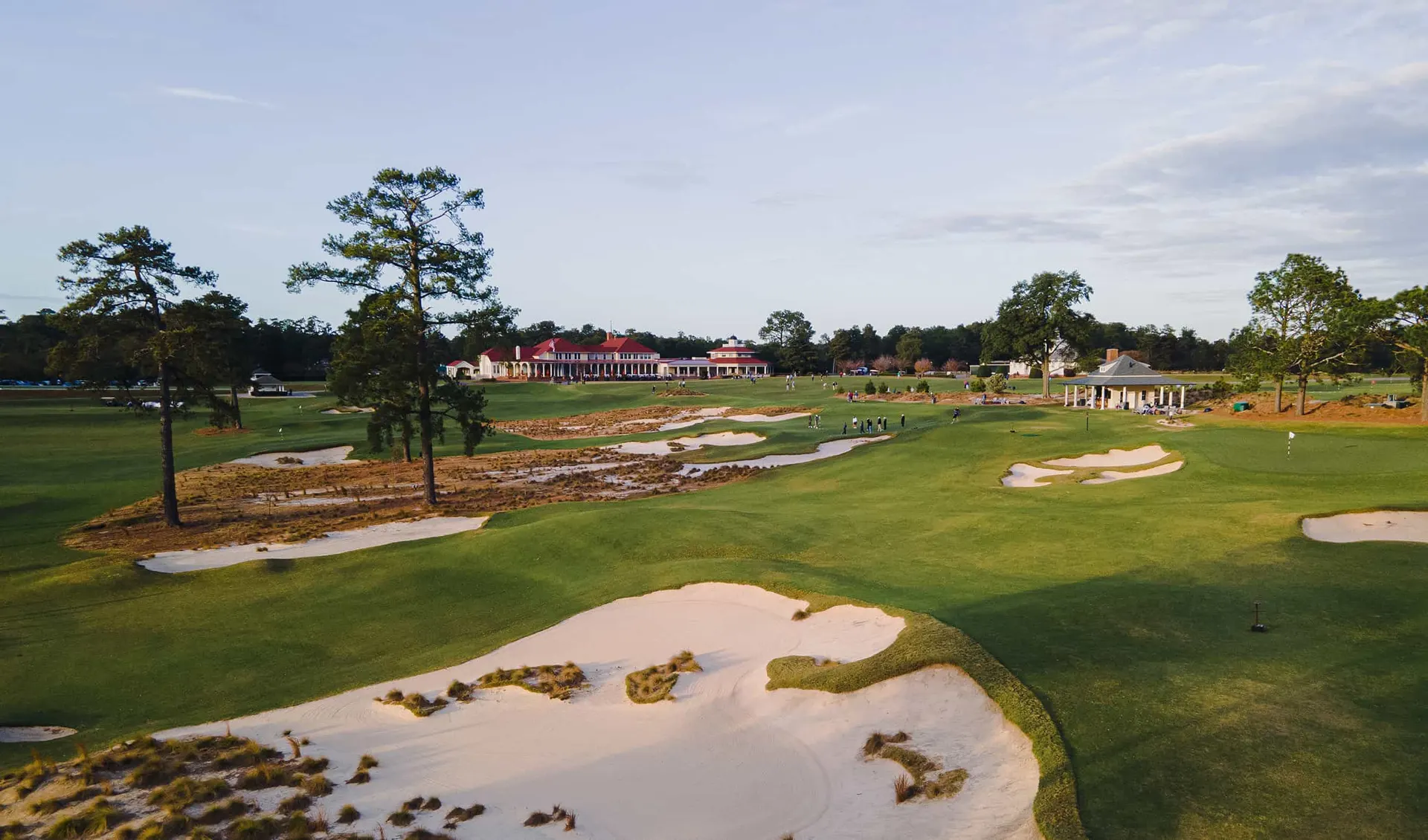
Thistle Dhu is an 18-hole putting course near the main clubhouse and works naturally before dinner or while the group waits for everyone to arrive. The Cradle is short-course golf; Thistle Dhu is putting.
Where to Stay
The Carolina Hotel is the classic Pinehurst choice. Its verandas, renovated rooms and central role at the resort suit groups that want the traditional experience and convenient resort transportation.
The Holly Inn has welcomed guests since 1895 and puts the village close at hand. The Manor offers a more contemporary setup, with North & South Bar in the hotel and Pinehurst Brewing Company nearby. Its private hospitality suites can suit larger groups.
Villas, condos and the Cottages at No. 8 give groups more shared space. Room occupancy, preferred atmosphere and where the group expects to spend its evenings should guide the choice—not simply the lowest room category.
Shaping Your Trip
Three nights is enough for a strong first Pinehurst trip. A group can play three full rounds, add The Cradle or Thistle Dhu and still have an evening in the village. A balanced lineup might feature No. 2, No. 4 and either No. 8 or No. 10.
Four nights makes sense for four full rounds, a less compressed arrival day or nearby Southern Pines. Pine Needles, Mid Pines and Southern Pines Golf Club can broaden the trip, but they should not be added simply to fill every open hour.
Resort transportation connects the hotels and courses, but the playing order still matters. If the group expects to walk and use caddies, avoid stacking the most demanding rounds. Our guide to choosing the right number of rounds can help set the pace.
Best Time to Go
Spring and fall are the prime golf seasons in the North Carolina Sandhills. Temperatures are generally more comfortable for walking, and demand tends to be strongest around those conditions. Groups targeting specific courses and preferred times should plan earlier for these periods.
Summer heat and humidity can make a walking-heavy itinerary harder. Winter can offer playable days and a quieter trip, but conditions are less predictable. The best month depends on whether the group prioritizes weather, flexibility or value.
Planning Considerations
Start with the courses the group would be disappointed to miss. For most first visits, that means deciding whether No. 2 is essential and whether No. 4 or No. 10 is the preferred second headline round.
Then choose the hotel and supporting courses around that core. Cost changes with season, hotel, occupancy, trip length, courses, caddies and included meals. A useful proposal should show the complete trip rather than isolated public prices. For broader context, see our golf trip cost guide.
Leave space for the clubhouse, The Deuce, The Cradle, Thistle Dhu and the village. Those are not filler between rounds; they are a major reason Pinehurst feels different from a trip built around unrelated daily tee times.
FAQ
How many nights should a Pinehurst golf trip be?
Three nights works for three full rounds and some short-course or putting time. Choose four nights if the group wants four major rounds, a slower pace or a day that includes Southern Pines-area golf.
Is Pinehurst No. 2 worth building the trip around?
Yes, especially for golfers interested in championship history and course architecture. Its crowned greens and sandy native areas create a challenge that feels distinct from the other resort courses. The rest of the itinerary should support that round, not exhaust the group before it.
Which Pinehurst courses should a first-time group play?
No. 2 and No. 4 are the strongest starting pair. Add No. 10 for rugged scale and a newer experience, or No. 8 for a secluded course with a different rhythm. The right answer depends on the number of rounds and what the group wants from the trip.
Do you need a car at Pinehurst?
Many groups can rely on resort transportation for the hotels, courses and central resort facilities. A car becomes more useful when adding Southern Pines-area courses, off-property dining or additional stops elsewhere in North Carolina.
Is The Cradle a putting course?
No. The Cradle is a nine-hole par-3 short course. Thistle Dhu is Pinehurst's 18-hole putting course.
Plan Your Trip with JEL
Pinehurst trips have many workable combinations, but the best one starts with the group's priority courses, preferred pace and room setup. Send us your dates, group size and course priorities, and we can build the golf and lodging into one trip proposal.


